Winning the Judgment Is Only Half the Battle: The Intelligence Gap in Asset Recovery
A judgment establishes a legal right to recover. It does not necessarily reveal where the recoverable value sits, who controls it, or how easily it can be reached.
The recent enforcement battle between Fortress Credit Corp. and real estate developer Charles S. Cohen offers a useful example.
In October 2024, a New York court granted Fortress summary judgment on a personal guarantee for $187.25 million. The judgment was later upheld on appeal.
Yet obtaining the judgment was only part of the process.
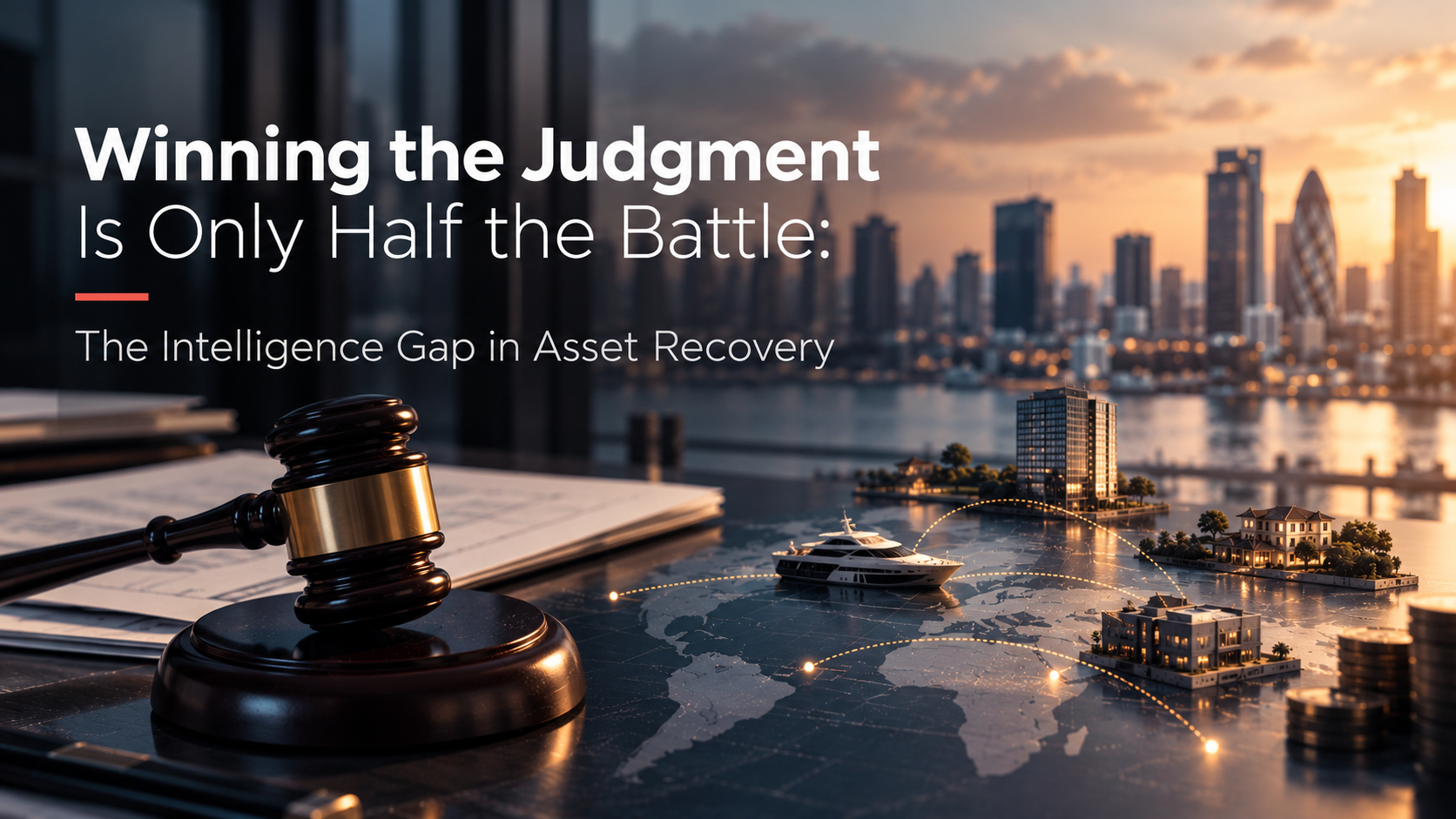
The dispute then moved into the practical realities of enforcement, including efforts to understand the location and extent of assets available to satisfy the debt. Related proceedings extended across multiple jurisdictions.
According to Cohen Brothers Realty, the judgment debt was paid in full in June 2026.
The outcome was successful. But the case illustrates a recurring challenge in high-value asset recovery:
Legal entitlement and practical recovery are not the same thing.
When the question changes
During the substantive dispute, the focus may be on liability, contractual obligations, fraud or damages.
After judgment, the questions can become very different:
- What assets remain within practical reach?
- Who actually controls relevant companies, structures or valuable property?
- Have interests or value moved to other entities or individuals?
- Which relationships are relevant to understanding those movements?
- Who has direct knowledge of decisions that may never be reflected in formal records?
Public records, disclosure proceedings and conventional asset tracing are essential tools.
But in complex cross-border matters, they may reveal only part of the picture.
Some of the most important information sits with people.
The intelligence gap
Formal ownership and actual control are not always the same.
A structure may show who legally owns an entity or asset, but it may not explain who directs decisions, who benefits economically, how arrangements operate in practice, or why particular transactions occurred.
That distinction can become critical in enforcement.
Lawful Human Intelligence can provide access to individuals who possess relevant first-hand knowledge and help clarify issues such as:
- control and decision-making
- relationships between key individuals
- historic transactions
- the practical operation of corporate or offshore structures
- the movement or use of value
- inconsistencies between formal records and operational reality
The purpose is not simply to identify another asset.
It is to build a more accurate picture of how value is controlled, who knows what, and where further evidence or recovery opportunities may exist.
That intelligence can help legal teams decide where to focus disclosure, enforcement or recovery efforts and which assumptions require further verification.
Why timing matters
Asset recovery strategy is often discussed only after a judgment has been obtained and enforcement becomes difficult.
In complex matters, that may be too late to begin building the intelligence picture.
Where there is a meaningful risk that recovery will depend on cross-border assets, layered structures or relationships between multiple individuals and entities, asset recovery Intelligence may be most valuable when it begins earlier.
That can allow counsel to build an understanding of the asset environment while the substantive dispute is still progressing, rather than starting from zero once enforcement becomes urgent.
Winning the case creates the legal right to recover. Understanding where the value sits, who controls it and how it can be reached may require a separate intelligence strategy.
At Dionaea, we support legal teams in high-stakes commercial disputes and asset recovery matters through lawful Human Intelligence operations designed to obtain critical primary-source information and court-ready evidence.