
Litigation Support Services
HUMINT-Based Evidence for High-Stakes Commercial Disputes
Complex disputes evolve. New facts emerge, the significance of particular individuals changes, and information disclosed during proceedings can create new strategic questions.
Dionaea supports litigation teams by helping counsel answer those questions through targeted intelligence and evidence gathering. Our role is to complement the legal strategy with information that can clarify disputed events, test assumptions, identify relevant individuals and strengthen the factual position as the case develops.
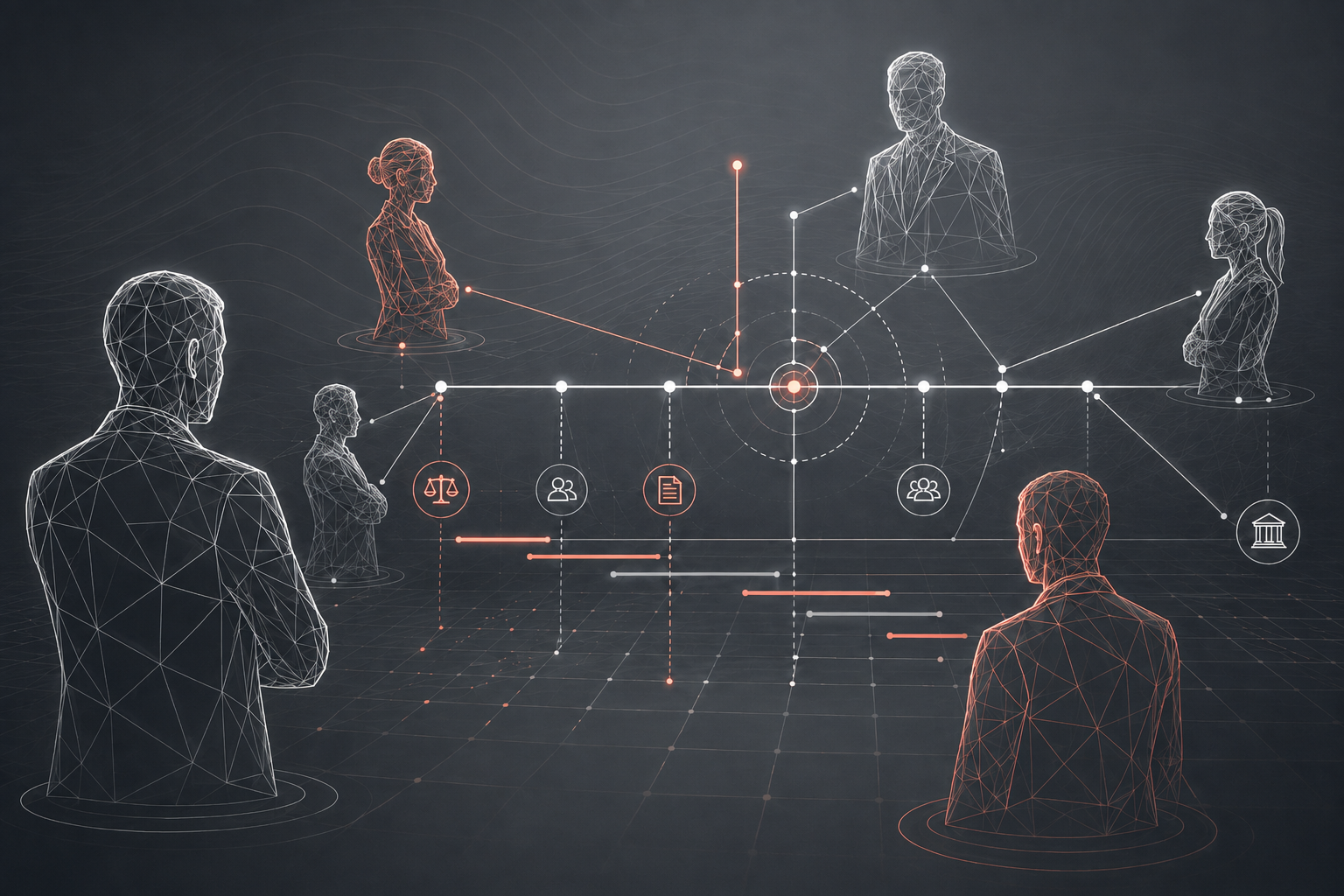
Supporting Counsel at Different Stages of Proceedings
The need for intelligence changes over the life of a dispute.
Before proceedings, counsel may need greater clarity on a key factual issue before deciding whether to commence a claim, how to frame it or where the strongest evidentiary opportunities may lie.
During pleadings and disclosure, newly identified names, communications, transactions or relationships may create specific questions that justify further intelligence work.
During preparation for hearings or trial, counsel may need to understand how relevant individuals describe events outside the formal litigation process, whether existing assumptions remain reliable, or whether additional evidence can be obtained.
During settlement discussions, intelligence may provide greater visibility into the opposing party’s circumstances, priorities or understanding of the events in dispute.
During enforcement, the focus may shift toward individuals with knowledge of ownership, control, assets or practical recovery opportunities.
The assignment therefore develops around the changing priorities of the legal team rather than following a fixed investigative sequence.
Intelligence Directed by the Legal Strategy
A litigation support assignment begins with the questions that matter to counsel.
The issue may concern what actually happened around a disputed transaction, who played a particular role, whether an explanation given by the opposing party is credible, how decisions were made, or whether another individual possesses knowledge relevant to the case.
We work with counsel to define those intelligence objectives precisely and determine which individuals are most likely to hold the relevant knowledge.
This keeps the work focused on information that can genuinely influence litigation strategy rather than generating intelligence without a clear legal purpose.
Reaching the People Who Know
Once the intelligence objective is defined, we identify the individual or individuals most likely to possess the relevant information.
This may include the opposing party or people within their close professional, commercial or personal circles.
Rather than observing or investigating those individuals from a distance, Dionaea creates a lawful and carefully designed engagement scenario that allows a trained HUMINT agent to interact with them directly.
The relationship develops naturally and away from the context of the dispute. As trust and familiarity develop, the agent listens for the subjects and circumstances that encourage the individual to speak openly about matters connected to the case.
Relevant information, including admissions, may then emerge voluntarily through conversation.
Turning Conversations Into Evidence
The value of HUMINT in litigation support lies in what those conversations can establish.
An individual may explain how a decision was reached, describe an arrangement between parties, clarify who exercised influence or control, recount events surrounding a transaction or make statements that confirm or challenge the factual account already before counsel.
Some conversations may simply provide strategic intelligence. Others may produce statements with potential evidentiary value.
Dionaea plans the operation with the applicable legal and procedural requirements in mind, securing value and admissibility.
Recording and Evidentiary Considerations
Where legally permitted, conversations may be discreetly recorded in jurisdictions that allow one-party-consent recording.
The relevant jurisdiction and method are assessed before the engagement takes place.
Recording enables statements and voluntary admissions to be preserved accurately. Where potential use in proceedings is contemplated, Dionaea coordinates with counsel so that legality, provenance and evidentiary considerations can be addressed from the outset.
Working Alongside Litigation Counsel
Dionaea’s role is complementary to that of the legal team.
Counsel determines the litigation strategy, legal arguments and procedural approach. Dionaea supports that strategy by obtaining intelligence and evidence from individuals whose knowledge may materially affect the factual picture.
The result is a focused intelligence capability that can be deployed when the case presents questions that conventional legal processes alone may not resolve.
Frequently Asked Questions
When should counsel consider using litigation intelligence?
Litigation intelligence can be useful when a material factual question remains unresolved, when new information emerges during proceedings, or when counsel identifies an individual likely to possess relevant knowledge.
What type of evidence can HUMINT produce?
Depending on the circumstances, direct conversations may produce statements, explanations or voluntary admissions relevant to disputed events, relationships, decisions or conduct.
Can HUMINT support an ongoing case rather than only pre-action work?
Yes. The intelligence objective can be adapted as pleadings, disclosure, hearings, settlement discussions or enforcement create new questions.
Can recorded conversations be used in proceedings?
Potential use depends on the applicable law and evidentiary rules. Where recording is contemplated, the jurisdiction and operational method are assessed in advance and coordinated with counsel.