
Human Intelligence for Brand Integrity, Distribution and Reputation
A brand can be damaged by activity that is difficult track.
Unauthorised distribution, grey-market sales, fraudulent representation, impersonation, coordinated reputation attacks and misuse by commercial partners may involve networks of people whose roles and relationships are not immediately visible.
Dionaea uses lawful Human Intelligence to help companies and legal teams understand who is behind harmful activity, how the relevant network operates and what is driving it.
The objective is to give decision-makers reliable first-hand intelligence before determining the appropriate commercial or legal response.
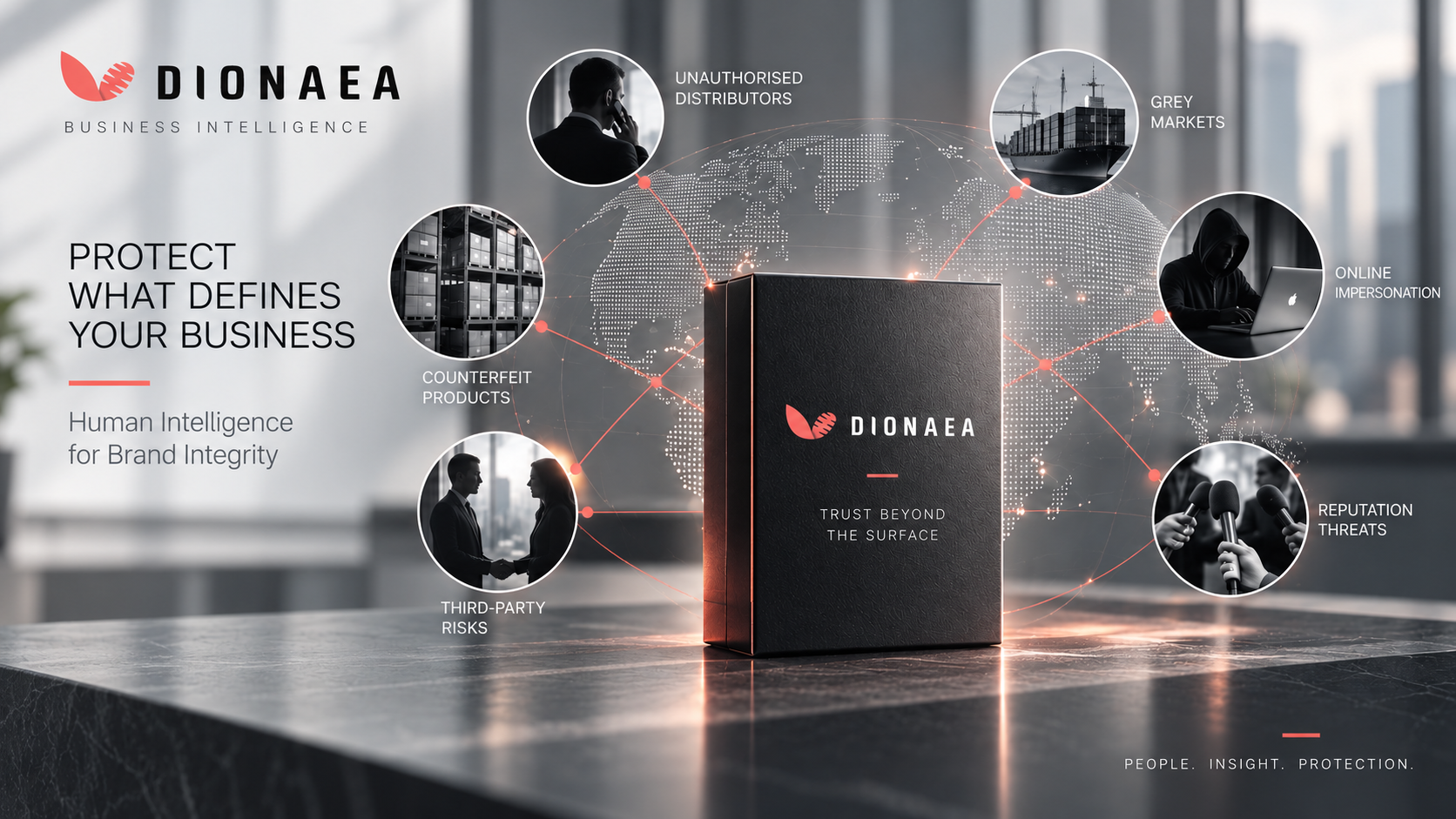
Understanding the Human Network Behind Brand Abuse
Digital monitoring can identify visible activity. It may show where products are being offered, which accounts are using a brand name or where negative content is appearing.
It does not necessarily explain who is responsible, how the activity is organised or why it is happening.
Human intelligence can help answer questions such as:
- Who is actually operating or controlling the activity?
- What relationships connect sellers, intermediaries, distributors or commercial partners?
- How are unauthorised products entering the market?
- Who benefits commercially from the activity?
- Is apparently independent activity being coordinated by another party?
- What do individuals inside the relevant network know about its structure and purpose?
These answers can change how a company assesses both the scale of the problem and the appropriate response.
Grey Markets and Unauthorised Distribution
A product may be genuine while its route to market is not authorised.
Grey-market activity can involve diverted stock, territory breaches, unauthorised resellers, undisclosed intermediaries or distributors operating outside agreed commercial terms.
Where documentary or digital analysis cannot establish how the channel operates, Dionaea can identify and engage individuals with direct knowledge of the distribution network.
HUMINT may help clarify where products originate, how they move between parties, which intermediaries are involved and whether authorised partners are participating in or facilitating the activity.
Fraudulent Representation and Brand Impersonation
A company may discover individuals or businesses presenting themselves as authorised representatives, partners, distributors or affiliates when no such relationship exists.
Online impersonation can be relatively easy to detect. Establishing who is behind it and how the operation functions can be considerably more difficult.
Human intelligence can provide insight into the individuals involved, their commercial relationships, the source of their products or services and the scale of the activity.
This can help the company determine whether the issue is isolated misuse or part of a broader organised network.
Counterfeit Distribution Networks
Counterfeit activity is often discussed as a product-authentication problem. For legal and commercial decision-makers, however, the more important question may be how the network behind the products operates.
Relevant intelligence may concern manufacturers, suppliers, brokers, importers, wholesalers, local distributors or others who facilitate the movement of counterfeit goods.
Dionaea can use HUMINT to develop a clearer picture of the people and relationships within that network, particularly where conventional monitoring identifies the visible sellers but not the individuals behind them.
This page focuses on the commercial and distribution network surrounding the brand threat. Questions concerning infringement of protected intellectual property itself are addressed separately through Dionaea’s Intellectual Property Protection service.
Reputation and Coordinated Brand Attacks
Not every threat to a brand involves products.
Companies and senior executives may face coordinated campaigns designed to damage reputation, undermine confidence or influence customers, investors, commercial partners or other stakeholders.
Where there are grounds to believe that apparently independent activity may be connected, HUMINT can help clarify the relationships and motivations behind it.
Relevant intelligence may include who initiated or financed the activity, whether intermediaries are involved, what objective the participants are pursuing and whether the campaign forms part of a wider commercial dispute.
Brand Risk Within Commercial Relationships
Brand exposure can also arise from companies that are formally connected to the business.
Distributors, licensees, agents, franchisees, joint-venture partners and other counterparties may operate in ways that affect brand value without immediately breaching visible contractual obligations.
When concerns arise, Dionaea can help obtain first-hand intelligence about how the relationship operates in practice.
This can reveal differences between formal arrangements and actual conduct, identify undisclosed relationships and help clients understand whether a commercial partner is creating a broader strategic risk.
From Visibility to Actionable Intelligence
Brand protection is most effective when a company understands not only what is happening, but also the people and incentives behind it.
Each Dionaea assignment therefore begins with a defined intelligence objective.
We determine which individuals are most likely to possess the relevant knowledge and develop an appropriate lawful engagement strategy. Through direct human interaction, information may emerge about relationships, commercial arrangements, decision-making and the structure of the activity.
The resulting intelligence can help legal and business teams decide whether to pursue enforcement, renegotiate a commercial relationship, strengthen distribution controls, address a reputation threat or take another strategic step.
Supporting Legal and Commercial Action
Some brand intelligence is primarily strategic. Other information may have potential evidentiary value.
Where legal proceedings or enforcement are contemplated, the operation can be planned with the relevant legal framework in mind. Dionaea coordinates with counsel where appropriate so that potential use, provenance and evidentiary considerations are addressed before engagement begins.
This allows the intelligence requirement to remain closely connected to the client’s eventual commercial or legal objective.
Frequently Asked Questions
How is HUMINT different from online brand monitoring?
Online monitoring identifies visible activity such as listings, accounts or content. HUMINT can reach individuals behind that activity and provide insight into relationships, motivations, distribution channels and decision-making.
Can HUMINT help with grey-market distribution?
Yes. Human intelligence can help clarify how genuine products are moving outside authorised channels, which intermediaries are involved and whether commercial partners are facilitating the activity.
Can Dionaea help identify who is behind a coordinated reputation attack?
Where relevant individuals can be identified and lawfully approached, HUMINT may help establish relationships, motivations and whether apparently separate actors are connected.
How is Brand Protection different from Intellectual Property Protection?
Brand Protection focuses on commercial networks, unauthorised channels, impersonation, reputation threats and misuse of brand relationships. Intellectual Property Protection focuses more directly on trade secrets, protected know-how and infringement of intellectual property rights.